How U.S. Election Results Are Counted and Certified
Election-night returns are preliminary snapshots, not certified results. State and local officials process eligible ballots, tabulate votes, reconcile records during a canvass, complete any required audits or recounts, and certify results under state and local rules. The sequence, deadlines, and responsible officials vary across the country.
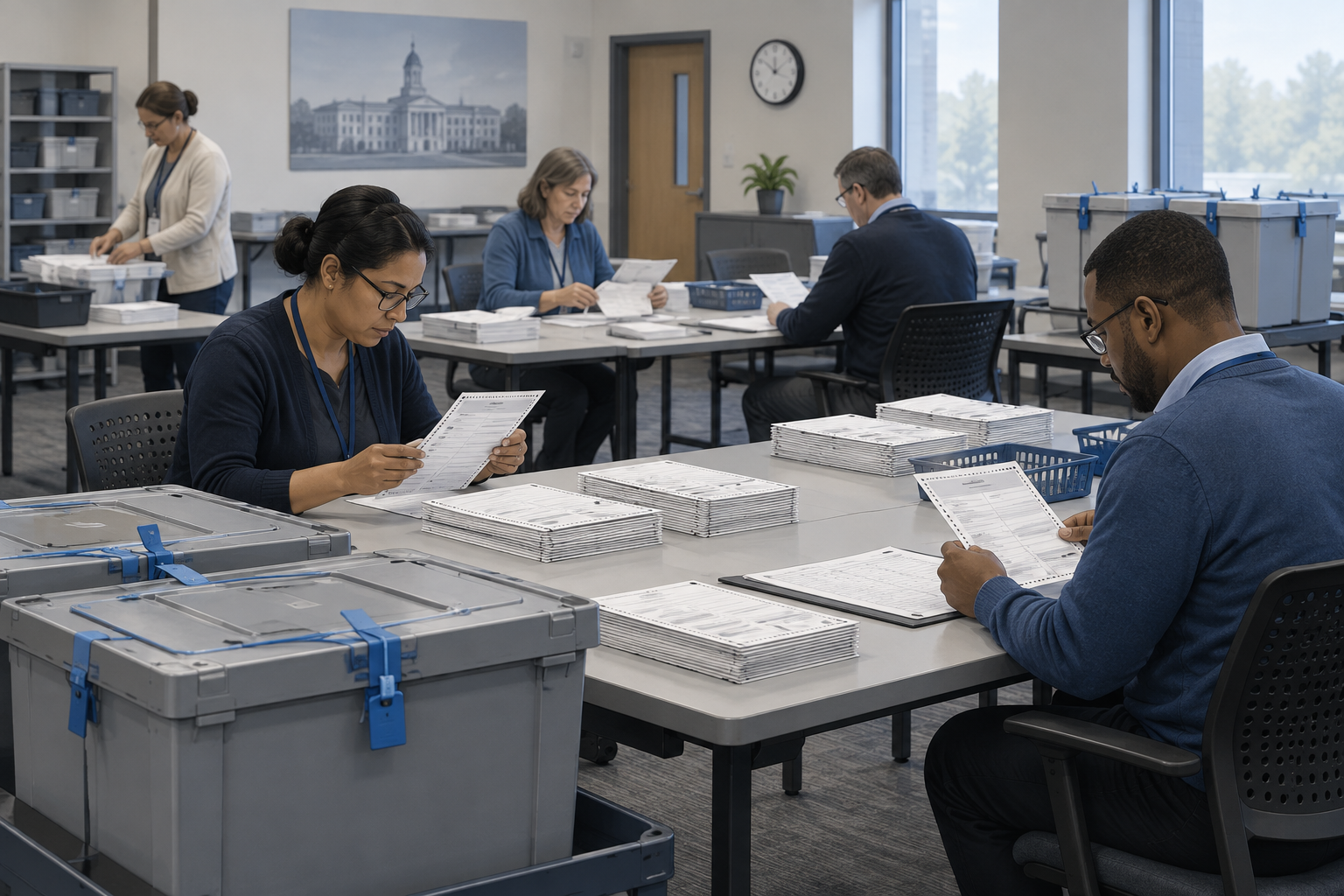
Why election-night results are not final
The United States does not have one national office that counts and certifies every ballot. Elections are administered through state and local systems, and the division of responsibilities varies among and within states. State law generally sets the rules; local election offices commonly carry them out. Federal agencies, including the U.S. Election Assistance Commission, provide guidance and support, but do not run the routine counting and certification of local, state, and federal contests. ([congress.gov](https://www.congress.gov/crs_external_products/R/PDF/R45549/R45549.3.pdf?utm_source=openai))
The numbers posted on election night are usually unofficial returns: early reports of votes counted so far. Officials may publish results in batches as voting locations report, while additional eligible ballots still need to be received, reviewed, or counted. A report saying that all precincts have reported does not necessarily mean every ballot has been counted or the result has been certified. ([eac.gov](https://www.eac.gov/election-officials/election-results-canvass-and-certification?utm_source=openai))
The pace of updates depends partly on state law and ballot type. Some mail ballots can be prepared for counting before Election Day; in other places, processing begins later. Ballots that arrive after Election Day may be countable if they meet the state’s rules. Provisional ballots require officials to determine whether the voter was eligible and whether the ballot may be counted. These differences help explain why the order and timing of reported totals can vary; by themselves, they do not establish that something improper happened. ([eac.gov](https://www.eac.gov/why-do-election-results-change-after-election-night?utm_source=openai))
1. Ballots are received, processed, and checked
Before a ballot can be included in a count, officials handle it according to the rules for that voting method. For a returned mail ballot, that may include checking the return envelope and required identifying information. If information is missing or a signature review is required, the applicable state rules determine whether officials can notify the voter and allow a correction. The steps and deadlines are not identical nationwide. ([eac.gov](https://www.eac.gov/how-do-election-officials-prevent-someone-from-voting-twice?utm_source=openai))
Provisional ballots are set aside while officials check eligibility and whether the voter has already cast a ballot. A provisional ballot is counted only if it meets the requirements set by state law. Keeping these ballots separate while eligibility is reviewed allows officials to resolve questions before including them in the totals. ([eac.gov](https://www.eac.gov/how-do-election-officials-prevent-someone-from-voting-twice?utm_source=openai))
Ballot handling also depends on the equipment and procedures a jurisdiction uses. Some ballots may need additional review if a scanner cannot read them or if a mark is unclear. Election officials apply the relevant voter-intent rules; they may transfer choices from a damaged or unreadable ballot to a scannable ballot under procedures designed to preserve those choices. The details are governed by state and local rules, not one nationwide method. ([eac.gov](https://www.eac.gov/sites/default/files/electionofficials/QuickStartGuides/Canvass_and_Certification_EAC_Quick_Start_Guide_508.pdf?utm_source=openai))
2. Votes are tabulated and preliminary totals are reported
Once ballots are ready to be counted, jurisdictions use their authorized procedures and voting systems to tabulate them. Results may be reported from individual voting locations or aggregated at a central election office. Officials transmit batches to election-night reporting systems, which display preliminary totals for the public. Those systems report unofficial results; they do not themselves certify an election. ([eac.gov](https://www.eac.gov/election-technology/estep-program/election-night-report-systems?utm_source=openai))
The first public totals may exclude ballots still being processed, provisional ballots awaiting eligibility review, some military and overseas ballots, valid ballots received after Election Day where state law allows them, or ballots requiring additional review. As those ballots are resolved and counted, the reported totals can change. A change in a preliminary total is not, on its own, evidence of a counting error; the relevant questions are whether the ballot was eligible and whether officials followed the applicable procedures. ([eac.gov](https://www.eac.gov/why-do-election-results-change-after-election-night?utm_source=openai))
News organizations may project a winner before officials finish canvassing or certify results. A media projection is not the same thing as an official result: projections are the news organization’s assessment, while certification is an action taken by election officials under state law. ([eac.gov](https://www.eac.gov/election-officials/election-results-canvass-and-certification?utm_source=openai))
3. The canvass checks and reconciles the election record
After voting, election officials conduct a canvass. In broad terms, the canvass brings together and checks the records needed to establish the final vote totals. Officials account for valid ballots across voting methods, review reports and supporting documentation, and reconcile ballot totals with records of voters and ballots issued or received. The canvass can also include resolving provisional ballots and ballot-marking questions under the jurisdiction’s rules. ([eac.gov](https://www.eac.gov/election-officials/election-results-canvass-and-certification?utm_source=openai))
A canvass is not simply another name for a recount. It is the broader post-election process for reviewing and confirming the election record. Its precise tasks, public meetings, responsible officials, and deadlines differ by state and sometimes by local jurisdiction. The Election Assistance Commission notes that jurisdictions may perform typical steps in different orders, or may not use every step in the same way. ([eac.gov](https://www.eac.gov/election-officials/election-results-canvass-and-certification?utm_source=openai))
This review takes time because officials must include all ballots that qualify under the law and complete required checks—not just report the fastest possible total. The final timetable depends on state deadlines, the types of ballots cast, and whether an audit, recount, or other process applies. ([eac.gov](https://www.eac.gov/where-do-i-find-election-results?utm_source=openai))
4. Audits and recounts serve different purposes
A post-election audit checks some aspect of the election process or vote tabulation after voting. In a tabulation audit, officials compare paper ballots or other paper records with machine-produced results. Depending on state law, an audit may review a sample or use another method, and it may take place before or after certification. If officials find a discrepancy, the law or audit procedure determines what happens next; an audit can lead to expanded review or a recount, but it is not automatically a full recount. ([ncsl.org](https://www.ncsl.org/elections-and-campaigns/post-election-audits?utm_source=openai))
A recount is a re-tally of ballots in a particular contest or portion of a contest. State rules determine whether a recount is automatic because of a close margin, may be requested, or can be ordered through a legal process. Rules also vary on who may request one, deadlines, costs, how ballots are reviewed, and whether certification is delayed or later updated. A recount can change the reported result; an audit’s main purpose is to check the accuracy of the count under the applicable audit method. ([ncsl.org](https://www.ncsl.org/elections-and-campaigns/election-recounts?utm_source=openai))
Neither term means the same thing everywhere. To understand a particular race, check the relevant state election office’s rules and notices for the audit or recount method, schedule, scope, and any reported findings.
5. Certification makes the results official
Certification is the formal step in which the authorized election official or board attests to the results after completing the required procedures. The certifying authority may be a local board, an individual local official, a state board, a secretary of state, a governor, or another body specified by law. Some contests involve certification at more than one level. The responsible officials and deadlines vary among states and jurisdictions. ([eac.gov](https://www.eac.gov/election-officials/election-results-canvass-and-certification?utm_source=openai))
The practical distinction is simple: posted returns are unofficial until the required canvass and certification steps are complete. Certification makes the results official under the relevant election process; it does not mean that recounts or legal challenges are impossible. If a recount or court proceeding occurs, the governing rules determine whether results are revised or further action is required. ([eac.gov](https://www.eac.gov/election-officials/election-results-canvass-and-certification?utm_source=openai))
For presidential elections, state certification is part of a separate, additional process. States issue certificates identifying appointed presidential electors under state law; the electors later cast electoral votes, which are transmitted and counted in Congress. The state’s certification of election results and the later federal count of electoral votes are related stages, but they are not the same procedure. ([archives.gov](https://www.archives.gov/electoral-college/roles?utm_source=openai))
How to check a result in your state
For the status of a particular race, start with the state or local election office responsible for that contest. Official election sites can distinguish preliminary returns from certified results and publish canvass records, certification documents, audit information, or recount notices where available. USAGov provides a directory for finding state and local election offices; the Election Assistance Commission also links voters to state election information. ([usa.gov](https://www.usa.gov/election-office?utm_source=openai))
When reading an update, look for the date, the contest and jurisdiction it covers, whether the numbers are labeled unofficial or certified, and which ballot types remain to be counted. If a recount or audit is mentioned, check its scope and status rather than assuming it has the same meaning or timing in every state.
Frequently asked questions
Why can election results change after election night?
Election-night totals are preliminary and may not include all eligible ballots. Officials may still be processing mail ballots, reviewing provisional ballots, counting eligible military or overseas ballots, or completing other steps required by state law. The canvass reconciles the election record before certification. ([eac.gov](https://www.eac.gov/why-do-election-results-change-after-election-night?utm_source=openai))
Does certification mean there can be no recount or challenge?
No. Certification is the official results step under the applicable process, but state law may permit recounts or election challenges afterward. The rules, deadlines, and effects on the results vary by jurisdiction. ([ncsl.org](https://www.ncsl.org/elections-and-campaigns/election-recounts?utm_source=openai))
Where can I find certified election results?
Check the state or local election office responsible for the race. USAGov provides a directory to help locate those offices, which publish official results and other election information. ([usa.gov](https://www.usa.gov/election-office?utm_source=openai))
Sources
- Congressional Research Service, The State and Local Role in Election Administration: Duties and Structures — Explains the decentralized structure of U.S. election administration and variation in state and local responsibilities.
- U.S. Election Assistance Commission, Election Results, Canvass, and Certification — Defines unofficial results, canvassing, audits, and certification, and explains how responsibilities and procedures vary.
- U.S. Election Assistance Commission, Why do election results change after election night? — Explains why preliminary totals may change and how ballot rules, canvassing, audits, and recounts relate.
- U.S. Election Assistance Commission, Canvassing & Certifying an Election — Describes canvassing, ballot reconciliation, provisional ballot review, voter-intent decisions, and certification.
- National Conference of State Legislatures, Post-Election Audits — Summarizes audit purposes, methods, timing, and how audit requirements vary by state.
- National Conference of State Legislatures, Election Recounts — Summarizes state variation in automatic and requested recount procedures.
- National Archives, Roles and Responsibilities in the Electoral College Process — Explains state certificates of ascertainment, elector meetings, and the separate Electoral College process.
- USAGov, State and local election offices — Provides a directory for finding state and local election offices.